
Picture a place where the entire sales process unfolds in one clear view. No endless threads of emails. No missing attachments. No guessing where things stand. That place exists, and it is called a digital sales room.
A digital sales room transforms how modern sales happen. Instead of juggling links, files, and separate tools, both sellers and buyers share one central space built for clarity. It keeps every conversation, document, and action connected. What once felt scattered now moves in rhythm.
To understand what a digital sales room looks like today, it helps to see where it came from.
For a long time, sales teams relied on email to send proposals, presentations, and demo recordings. Buyers had to collect those materials, share them internally, and try to keep track of updates. Each message was another puzzle piece, and keeping the picture together was never easy.
As B2B deals became more complex, the need for structure grew. Sellers wanted to guide the process, and buyers wanted transparency. Early enablement tools helped store content, but they were built for internal teams, not for buyer collaboration. The next step was to create a shared space where both sides could work together in real time. That idea became the foundation of the digital sales room.
Now that the foundation is clear, let’s step inside and explore what a digital sales room actually looks like.
Imagine entering a secure web page designed entirely for one deal. The layout feels calm and organized. On the left side, there is a simple navigation menu with sections for shared content, communication, and timelines. The center displays the main materials, such as product videos, proposals, or pricing breakdowns. On the right, engagement analytics quietly show who has viewed what and for how long.
Everything has purpose. The design is clean, branded, and intuitive. Buyers can explore without confusion. Sellers can monitor engagement and plan next steps. Each element feels connected, forming a shared environment that replaces the chaos of traditional deal management.
A digital sales room is not another tool in the stack. It is the space where the deal actually happens.
.png)
Let’s break down the core elements that make a digital sales room work.
Every digital sales room begins with content. This is where the seller uploads presentations, case studies, or contracts. The hub updates automatically when new versions are added, so there are no outdated files or lost revisions. Buyers see one clear, current set of materials at all times.
.png)
The buyer’s view is simple and guided. A dashboard shows where they are in the process and what comes next. It also lists who is involved in the deal, what has been reviewed, and what is still pending. Instead of searching through messages, buyers find everything they need in one place.
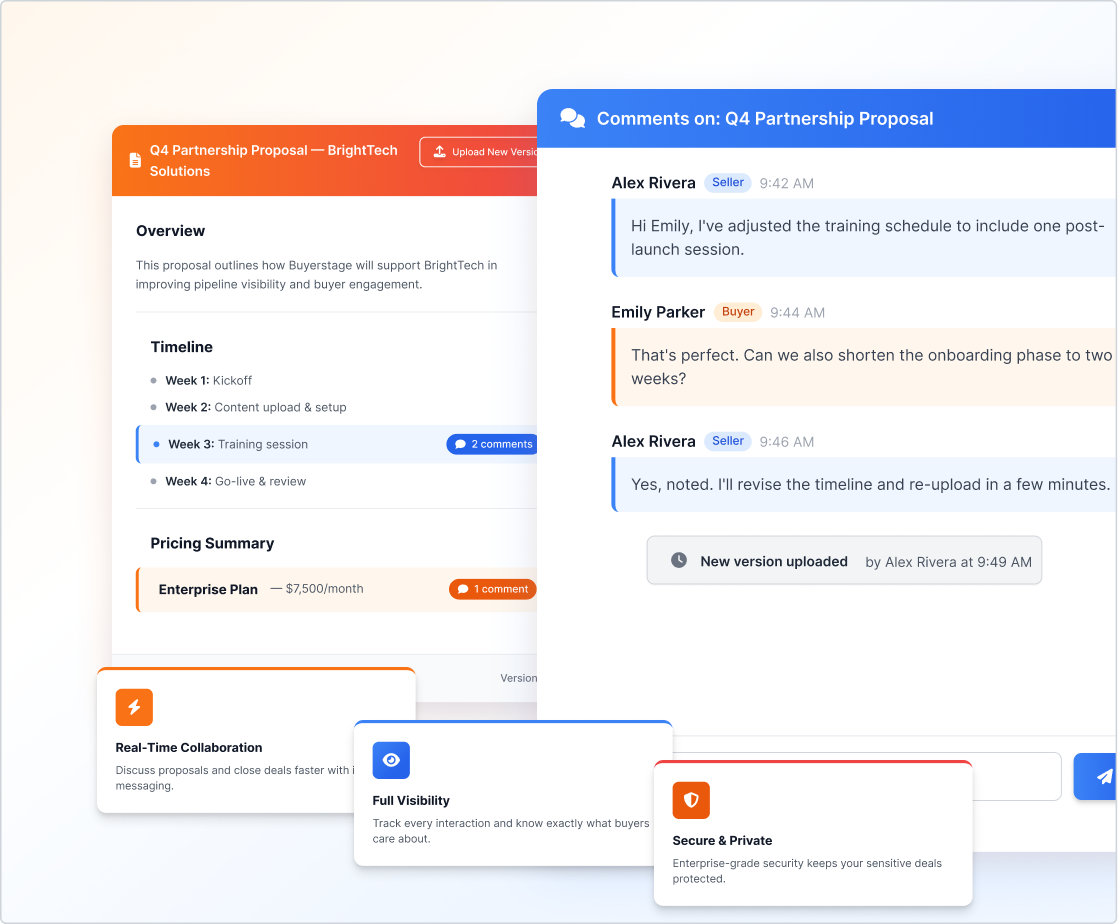
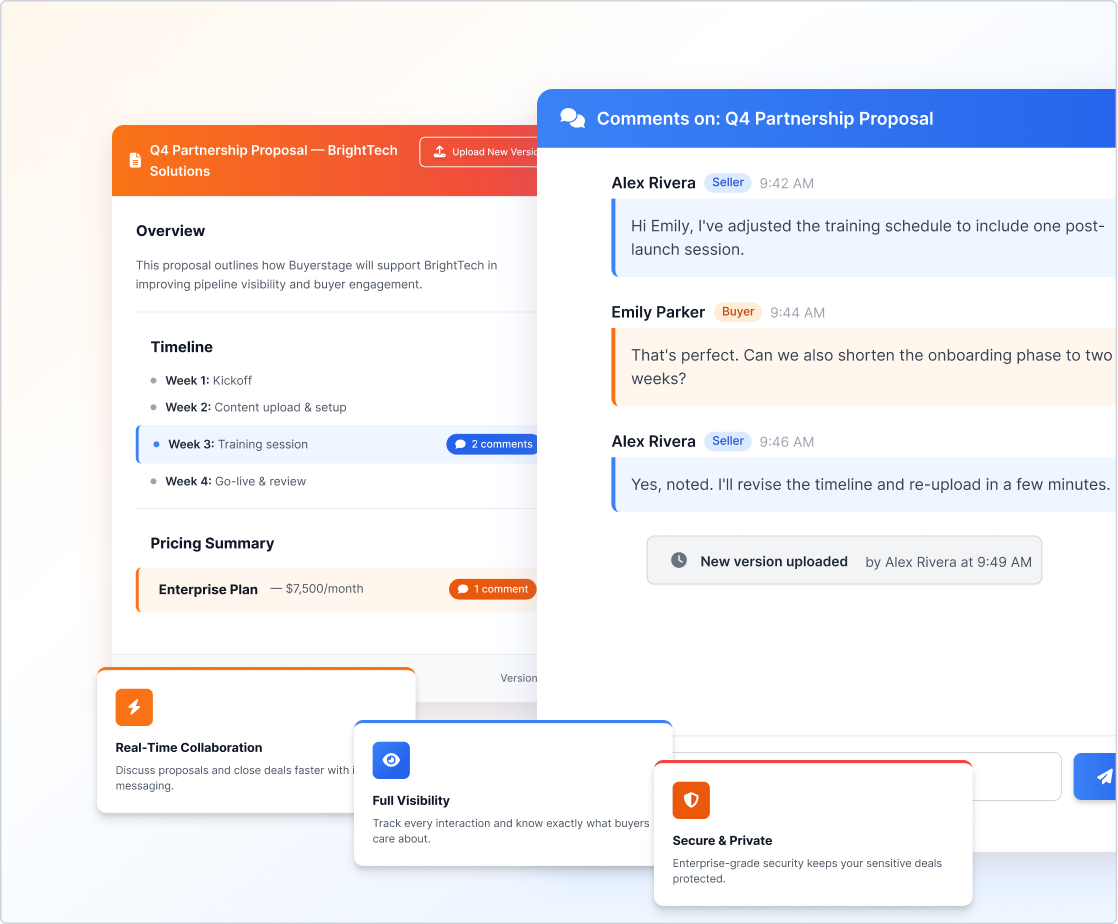
Questions, clarifications, and comments happen directly inside the room. If a buyer asks about a proposal, the message appears beside that exact document. Sellers can respond instantly, and both sides keep the full context. No external threads, no confusion, no delays.

Large deals often stall when next steps are unclear. The mutual action plan inside a digital sales room fixes that. It shows key milestones, responsible parties, and completion status in real time. Each participant can track progress and see where attention is needed. The plan becomes a shared map that keeps the deal moving.
While the buyer explores, the room quietly collects insights. Sellers can see which documents draw the most attention, how long each stakeholder stays engaged, and what content sparks renewed interest. These analytics help teams prioritize follow-ups and understand what truly matters to the buyer.
Before diving into how deals flow, it’s worth understanding the role design plays in building confidence.
The way a digital sales room looks and feels matters as much as what it does. A clear, uncluttered design communicates confidence. Buyers trust experiences that feel organized and professional. Every interaction should reflect that.
Strong visuals, consistent branding, and intuitive navigation make a lasting impression. Instead of overwhelming the buyer with links and documents, the digital sales room gives them a simple, reliable space to explore. The result is a smoother journey that builds trust naturally.
Now let’s follow the path of a deal as it moves through the digital sales room.
A digital sales room follows a natural rhythm that mirrors the life of a deal.
It starts with creation. The sales team sets up a new room, adds relevant content, and customizes it for the buyer. The tone of the room aligns with the stage of the conversation, whether it is discovery, proposal, or closing.
Next comes the invitation. Buyers receive access and enter the space. They review documents, watch demos, and leave comments. Everything happens inside the room, so alignment forms quickly.
As the relationship deepens, collaboration grows. New stakeholders join, timelines evolve, and tasks move forward through the shared action plan. The room becomes a single source of truth for both sides.
Analytics then reveal what works. Sellers track engagement and adapt their strategies based on real activity rather than assumptions. Each insight strengthens the next interaction.
When the deal closes, the same room can evolve into an onboarding or customer success space. The relationship continues without interruption, reinforcing continuity and trust.
Looking ahead, digital sales rooms will continue to reshape how buyers and sellers connect.
Digital sales rooms represent more than a new tool. They mark a shift toward transparency and shared ownership in B2B relationships. By giving both sides a single, living workspace, they remove friction and bring precision to every deal.
The next wave of digital sales rooms will go even further. Integrations with CRM systems, analytics platforms, and communication tools will make them smarter and more adaptive. As technology advances, these rooms will predict engagement patterns, highlight key stakeholders, and recommend next steps based on data.
What will not change is the purpose. A digital sales room is built to make selling and buying simpler, clearer, and more human. It replaces uncertainty with shared understanding and turns every deal into a connected experience that both sides can trust.
You have seen what a digital sales room looks like. Now it is time to build one for your own deals. Buyerstage gives your team a clear, shared workspace that keeps every conversation, document, and next step in one place. Track engagement as it happens, stay aligned with buyers, and move deals forward with confidence.
Picture a place where the entire sales process unfolds in one clear view. No endless threads of emails. No missing attachments. No guessing where things stand. That place exists, and it is called a digital sales room.
A digital sales room transforms how modern sales happen. Instead of juggling links, files, and separate tools, both sellers and buyers share one central space built for clarity. It keeps every conversation, document, and action connected. What once felt scattered now moves in rhythm.
To understand what a digital sales room looks like today, it helps to see where it came from.
For a long time, sales teams relied on email to send proposals, presentations, and demo recordings. Buyers had to collect those materials, share them internally, and try to keep track of updates. Each message was another puzzle piece, and keeping the picture together was never easy.
As B2B deals became more complex, the need for structure grew. Sellers wanted to guide the process, and buyers wanted transparency. Early enablement tools helped store content, but they were built for internal teams, not for buyer collaboration. The next step was to create a shared space where both sides could work together in real time. That idea became the foundation of the digital sales room.
Now that the foundation is clear, let’s step inside and explore what a digital sales room actually looks like.
Imagine entering a secure web page designed entirely for one deal. The layout feels calm and organized. On the left side, there is a simple navigation menu with sections for shared content, communication, and timelines. The center displays the main materials, such as product videos, proposals, or pricing breakdowns. On the right, engagement analytics quietly show who has viewed what and for how long.
Everything has purpose. The design is clean, branded, and intuitive. Buyers can explore without confusion. Sellers can monitor engagement and plan next steps. Each element feels connected, forming a shared environment that replaces the chaos of traditional deal management.
A digital sales room is not another tool in the stack. It is the space where the deal actually happens.
Let’s break down the core elements that make a digital sales room work.
Every digital sales room begins with content. This is where the seller uploads presentations, case studies, or contracts. The hub updates automatically when new versions are added, so there are no outdated files or lost revisions. Buyers see one clear, current set of materials at all times.
The buyer’s view is simple and guided. A dashboard shows where they are in the process and what comes next. It also lists who is involved in the deal, what has been reviewed, and what is still pending. Instead of searching through messages, buyers find everything they need in one place.
Questions, clarifications, and comments happen directly inside the room. If a buyer asks about a proposal, the message appears beside that exact document. Sellers can respond instantly, and both sides keep the full context. No external threads, no confusion, no delays.
Large deals often stall when next steps are unclear. The mutual action plan inside a digital sales room fixes that. It shows key milestones, responsible parties, and completion status in real time. Each participant can track progress and see where attention is needed. The plan becomes a shared map that keeps the deal moving.
While the buyer explores, the room quietly collects insights. Sellers can see which documents draw the most attention, how long each stakeholder stays engaged, and what content sparks renewed interest. These analytics help teams prioritize follow-ups and understand what truly matters to the buyer.
Before diving into how deals flow, it’s worth understanding the role design plays in building confidence.
The way a digital sales room looks and feels matters as much as what it does. A clear, uncluttered design communicates confidence. Buyers trust experiences that feel organized and professional. Every interaction should reflect that.
Strong visuals, consistent branding, and intuitive navigation make a lasting impression. Instead of overwhelming the buyer with links and documents, the digital sales room gives them a simple, reliable space to explore. The result is a smoother journey that builds trust naturally.
Now let’s follow the path of a deal as it moves through the digital sales room.
A digital sales room follows a natural rhythm that mirrors the life of a deal.
It starts with creation. The sales team sets up a new room, adds relevant content, and customizes it for the buyer. The tone of the room aligns with the stage of the conversation, whether it is discovery, proposal, or closing.
Next comes the invitation. Buyers receive access and enter the space. They review documents, watch demos, and leave comments. Everything happens inside the room, so alignment forms quickly.
As the relationship deepens, collaboration grows. New stakeholders join, timelines evolve, and tasks move forward through the shared action plan. The room becomes a single source of truth for both sides.
Analytics then reveal what works. Sellers track engagement and adapt their strategies based on real activity rather than assumptions. Each insight strengthens the next interaction.
When the deal closes, the same room can evolve into an onboarding or customer success space. The relationship continues without interruption, reinforcing continuity and trust.
Looking ahead, digital sales rooms will continue to reshape how buyers and sellers connect.
Digital sales rooms represent more than a new tool. They mark a shift toward transparency and shared ownership in B2B relationships. By giving both sides a single, living workspace, they remove friction and bring precision to every deal.
The next wave of digital sales rooms will go even further. Integrations with CRM systems, analytics platforms, and communication tools will make them smarter and more adaptive. As technology advances, these rooms will predict engagement patterns, highlight key stakeholders, and recommend next steps based on data.
What will not change is the purpose. A digital sales room is built to make selling and buying simpler, clearer, and more human. It replaces uncertainty with shared understanding and turns every deal into a connected experience that both sides can trust.
You have seen what a digital sales room looks like. Now it is time to build one for your own deals. Buyerstage gives your team a clear, shared workspace that keeps every conversation, document, and next step in one place. Track engagement as it happens, stay aligned with buyers, and move deals forward with confidence.
