
Sales enablement has become a foundational concept in modern revenue organizations, yet it is still widely misunderstood. Many teams associate it with content libraries or onboarding materials, but those elements alone do not explain its purpose or impact. To properly understand what sales enablement is, it must be viewed as an operational system that supports how buyers evaluate, align, and make decisions.
This article explains sales enablement from the ground up, beginning with its definition, moving through its evolution, and ending with the strategies that make it a driver of long term growth rather than a supporting initiative.
Sales enablement is the structured practice of equipping sales teams with the information, context, processes, and insights required to guide buyers through complex purchasing decisions. Its primary objective is to reduce friction in the buying process while improving consistency and effectiveness across sales interactions.
Unlike traditional sales support functions, sales enablement does not focus on individual performance in isolation. It focuses on creating repeatable conditions under which sales teams can perform well across different markets, deal sizes, and buyer profiles.
When teams ask what is sales enablement, the most accurate answer is that it governs how sales knowledge is created, distributed, applied, and improved over time.
Sales enablement became necessary as buying behavior changed. Buyers no longer rely on sales teams as their primary source of information. They conduct independent research, compare vendors early, and involve multiple stakeholders in decisions. This shift created gaps that traditional sales processes could not address.
Sales teams began encountering buyers who were informed but misaligned internally. Conversations moved faster but stalled more often. Deals reached advanced stages without consensus. Sales enablement emerged as a response to these structural challenges.
Rather than focusing solely on persuasion, enablement focuses on decision support. It helps sales teams provide clarity, structure, and shared understanding throughout the buying process.
Sales training and sales enablement are often confused, but they serve different purposes. Training focuses on developing individual skills such as communication, negotiation, and product knowledge. Sales enablement focuses on how those skills are applied consistently within a defined process.
Training prepares people. Enablement prepares systems.
Sales enablement ensures that trained skills are reinforced through workflows, content, and feedback loops. Without enablement, training decays quickly. Without training, enablement lacks execution. Growth requires both, but enablement is what connects learning to outcomes.
Sales enablement begins with process clarity. This includes defining how buyers move from awareness to decision, what information they need at each stage, and how sales teams support that progression.
Enablement does not invent the sales process, but it formalizes and operationalizes it. It ensures that messaging, content, and activities align with buyer progression rather than internal assumptions.
Process alignment reduces variability across deals. It allows teams to diagnose problems earlier and adjust strategy based on patterns rather than anecdotes.
Content is only effective when it is contextual. Sales enablement focuses on mapping content to specific decision points rather than creating large volumes of material.
This includes defining when a piece of content should be used, what problem it addresses, and how it supports buyer alignment. Enablement also ensures content remains accurate, current, and relevant as products and markets evolve.
In this context, content is not marketing collateral. It is a decision tool.
Sales organizations generate valuable knowledge every day through live conversations. Sales enablement captures that knowledge and turns it into shared understanding.
This includes insights about objections, competitive positioning, buyer concerns, and successful approaches. Enablement ensures that knowledge does not remain isolated with individual representatives but becomes part of the organizational memory.
Knowledge distribution shortens ramp time and reduces dependence on informal mentoring.
Sales enablement relies on continuous feedback from real deals. This includes tracking buyer engagement with materials, identifying where deals stall, and understanding which messages resonate.
These insights inform adjustments to content, process, and training. Over time, enablement creates a feedback loop where selling activity improves the system itself.
This is one of the most underappreciated aspects of sales enablement and one of the reasons it directly contributes to growth.
Sales enablement drives growth by improving efficiency, consistency, and buyer confidence.
Efficiency improves because sales teams spend less time searching for information or recreating materials. Consistency improves because messaging and approach are aligned across the organization. Buyer confidence improves because interactions feel structured and intentional.
These factors reduce sales cycle length and increase conversion rates without requiring additional volume at the top of the funnel.
Growth driven by enablement is cumulative. Each improvement compounds over time as systems mature and insights accumulate.
Sales enablement fails when it is treated as a content project rather than an operational discipline. Creating materials without clear use cases leads to low adoption. Implementing tools without process clarity creates complexity rather than support.
Another common failure point is lack of ownership. Enablement requires accountability for maintaining relevance. When ownership is unclear, systems degrade quickly.
Successful sales enablement requires ongoing stewardship. It must evolve alongside buyer behavior and internal strategy.
Technology supports sales enablement but does not define it. Platforms help organize content, surface insights, and track engagement, but they only add value when aligned with a clear enablement strategy.
The role of technology is to reduce cognitive load on sales teams and increase visibility into buyer behavior. When technology is layered onto unclear processes, it amplifies confusion instead of solving it.
Sales enablement strategy should always precede tool selection.
Measuring sales enablement requires focusing on outcomes rather than activity. Useful indicators include deal progression consistency, content engagement patterns, and time to productivity for new hires.
Enablement success is reflected in fewer stalled deals, clearer buyer alignment, and more predictable revenue outcomes. These signals indicate that the system is working as intended.
Measurement also informs iteration. Enablement is never complete. It improves through deliberate analysis and adjustment.
Sales enablement is not a campaign or initiative. It is a long term capability that strengthens as organizations learn from their own execution.
Teams that invest in enablement create durable advantages. They adapt faster, onboard more effectively, and scale without losing quality. Over time, enablement becomes embedded in how the organization operates.
Understanding what is sales enablement at this level reveals why it is increasingly viewed as essential infrastructure for growth rather than optional support.
Sales enablement works when it is treated seriously, designed intentionally, and maintained continuously. When that happens, growth becomes more predictable, conversations become more effective, and buyers experience clarity instead of friction.
Knowing what sales enablement is only becomes valuable when it is applied within real sales cycles, real buyers, and real internal workflows. Theory alone does not expose where friction exists or where alignment breaks down.
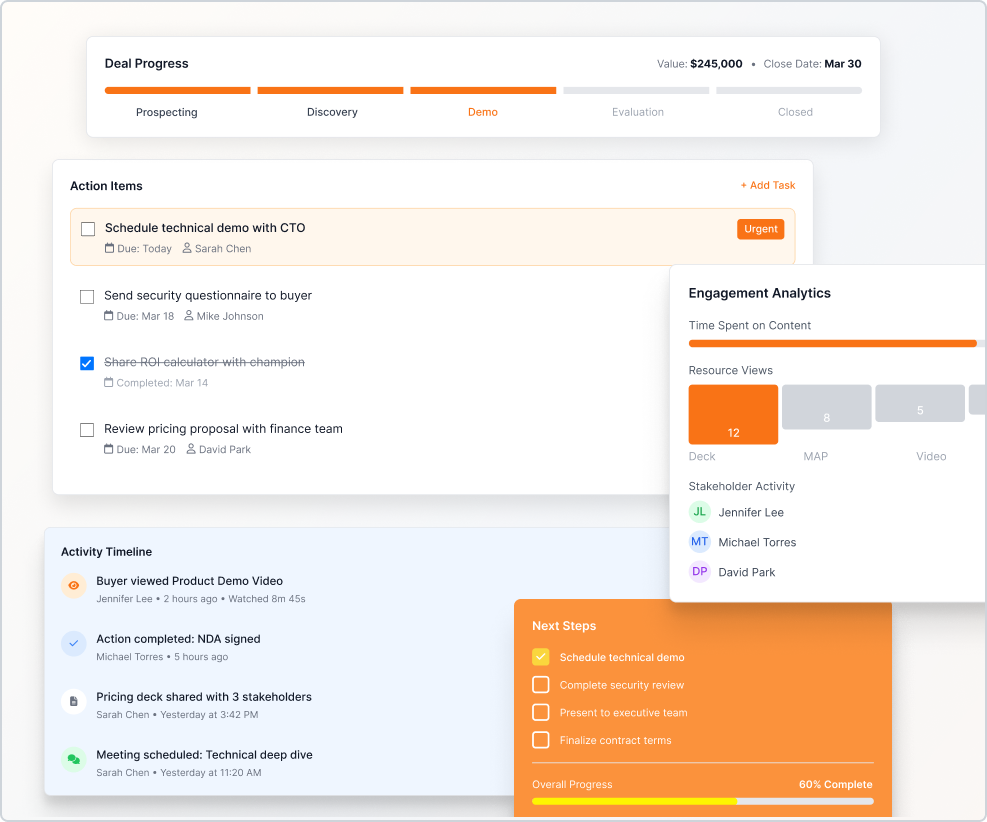
Buyerstage offers a 14 day free trial that allows teams to evaluate sales enablement in practice, not in isolation. The trial provides access to a structured buyer engagement environment where sales content, deal context, and stakeholder collaboration live in one place.
This approach makes it easier to understand how enablement functions when it supports active deals rather than hypothetical scenarios. Teams can observe how buyers interact with shared information, how conversations evolve, and where clarity improves.
For organizations evaluating how to operationalize sales enablement without committing upfront, the 14 day free trial offers a practical way to assess fit based on real usage rather than assumptions.
Sales enablement has become a foundational concept in modern revenue organizations, yet it is still widely misunderstood. Many teams associate it with content libraries or onboarding materials, but those elements alone do not explain its purpose or impact. To properly understand what sales enablement is, it must be viewed as an operational system that supports how buyers evaluate, align, and make decisions.
This article explains sales enablement from the ground up, beginning with its definition, moving through its evolution, and ending with the strategies that make it a driver of long term growth rather than a supporting initiative.
Sales enablement is the structured practice of equipping sales teams with the information, context, processes, and insights required to guide buyers through complex purchasing decisions. Its primary objective is to reduce friction in the buying process while improving consistency and effectiveness across sales interactions.
Unlike traditional sales support functions, sales enablement does not focus on individual performance in isolation. It focuses on creating repeatable conditions under which sales teams can perform well across different markets, deal sizes, and buyer profiles.
When teams ask what is sales enablement, the most accurate answer is that it governs how sales knowledge is created, distributed, applied, and improved over time.
Sales enablement became necessary as buying behavior changed. Buyers no longer rely on sales teams as their primary source of information. They conduct independent research, compare vendors early, and involve multiple stakeholders in decisions. This shift created gaps that traditional sales processes could not address.
Sales teams began encountering buyers who were informed but misaligned internally. Conversations moved faster but stalled more often. Deals reached advanced stages without consensus. Sales enablement emerged as a response to these structural challenges.
Rather than focusing solely on persuasion, enablement focuses on decision support. It helps sales teams provide clarity, structure, and shared understanding throughout the buying process.
Sales training and sales enablement are often confused, but they serve different purposes. Training focuses on developing individual skills such as communication, negotiation, and product knowledge. Sales enablement focuses on how those skills are applied consistently within a defined process.
Training prepares people. Enablement prepares systems.
Sales enablement ensures that trained skills are reinforced through workflows, content, and feedback loops. Without enablement, training decays quickly. Without training, enablement lacks execution. Growth requires both, but enablement is what connects learning to outcomes.
Sales enablement begins with process clarity. This includes defining how buyers move from awareness to decision, what information they need at each stage, and how sales teams support that progression.
Enablement does not invent the sales process, but it formalizes and operationalizes it. It ensures that messaging, content, and activities align with buyer progression rather than internal assumptions.
Process alignment reduces variability across deals. It allows teams to diagnose problems earlier and adjust strategy based on patterns rather than anecdotes.
Content is only effective when it is contextual. Sales enablement focuses on mapping content to specific decision points rather than creating large volumes of material.
This includes defining when a piece of content should be used, what problem it addresses, and how it supports buyer alignment. Enablement also ensures content remains accurate, current, and relevant as products and markets evolve.
In this context, content is not marketing collateral. It is a decision tool.
Sales organizations generate valuable knowledge every day through live conversations. Sales enablement captures that knowledge and turns it into shared understanding.
This includes insights about objections, competitive positioning, buyer concerns, and successful approaches. Enablement ensures that knowledge does not remain isolated with individual representatives but becomes part of the organizational memory.
Knowledge distribution shortens ramp time and reduces dependence on informal mentoring.
Sales enablement relies on continuous feedback from real deals. This includes tracking buyer engagement with materials, identifying where deals stall, and understanding which messages resonate.
These insights inform adjustments to content, process, and training. Over time, enablement creates a feedback loop where selling activity improves the system itself.
This is one of the most underappreciated aspects of sales enablement and one of the reasons it directly contributes to growth.
Sales enablement drives growth by improving efficiency, consistency, and buyer confidence.
Efficiency improves because sales teams spend less time searching for information or recreating materials. Consistency improves because messaging and approach are aligned across the organization. Buyer confidence improves because interactions feel structured and intentional.
These factors reduce sales cycle length and increase conversion rates without requiring additional volume at the top of the funnel.
Growth driven by enablement is cumulative. Each improvement compounds over time as systems mature and insights accumulate.
Sales enablement fails when it is treated as a content project rather than an operational discipline. Creating materials without clear use cases leads to low adoption. Implementing tools without process clarity creates complexity rather than support.
Another common failure point is lack of ownership. Enablement requires accountability for maintaining relevance. When ownership is unclear, systems degrade quickly.
Successful sales enablement requires ongoing stewardship. It must evolve alongside buyer behavior and internal strategy.
Technology supports sales enablement but does not define it. Platforms help organize content, surface insights, and track engagement, but they only add value when aligned with a clear enablement strategy.
The role of technology is to reduce cognitive load on sales teams and increase visibility into buyer behavior. When technology is layered onto unclear processes, it amplifies confusion instead of solving it.
Sales enablement strategy should always precede tool selection.
Measuring sales enablement requires focusing on outcomes rather than activity. Useful indicators include deal progression consistency, content engagement patterns, and time to productivity for new hires.
Enablement success is reflected in fewer stalled deals, clearer buyer alignment, and more predictable revenue outcomes. These signals indicate that the system is working as intended.
Measurement also informs iteration. Enablement is never complete. It improves through deliberate analysis and adjustment.
Sales enablement is not a campaign or initiative. It is a long term capability that strengthens as organizations learn from their own execution.
Teams that invest in enablement create durable advantages. They adapt faster, onboard more effectively, and scale without losing quality. Over time, enablement becomes embedded in how the organization operates.
Understanding what is sales enablement at this level reveals why it is increasingly viewed as essential infrastructure for growth rather than optional support.
Sales enablement works when it is treated seriously, designed intentionally, and maintained continuously. When that happens, growth becomes more predictable, conversations become more effective, and buyers experience clarity instead of friction.
Knowing what sales enablement is only becomes valuable when it is applied within real sales cycles, real buyers, and real internal workflows. Theory alone does not expose where friction exists or where alignment breaks down.
Buyerstage offers a 14 day free trial that allows teams to evaluate sales enablement in practice, not in isolation. The trial provides access to a structured buyer engagement environment where sales content, deal context, and stakeholder collaboration live in one place.
This approach makes it easier to understand how enablement functions when it supports active deals rather than hypothetical scenarios. Teams can observe how buyers interact with shared information, how conversations evolve, and where clarity improves.
For organizations evaluating how to operationalize sales enablement without committing upfront, the 14 day free trial offers a practical way to assess fit based on real usage rather than assumptions.
